The Speeder
The Mk3
The world’s first electric flying racing car. Remotely piloted, built in Adelaide and raced by national teams in the Airspeeder International Series.
The race series- 120+
- km/h top speed
- 96
- kW electric powertrain
- 100
- kg craft weight
- 8
- rotors in an X formation
- 2:1+
- thrust to weight
The Speeder
Built to race
The Airspeeder Mk3 is a full-sized, remotely piloted electric vertical take-off and landing (eVTOL) aircraft, engineered for one job: racing.
Every craft on the grid is designed and built in Adelaide, South Australia by Alauda Aeronautics. Teams fly the same hardware, so victories come from strategy and airmanship.
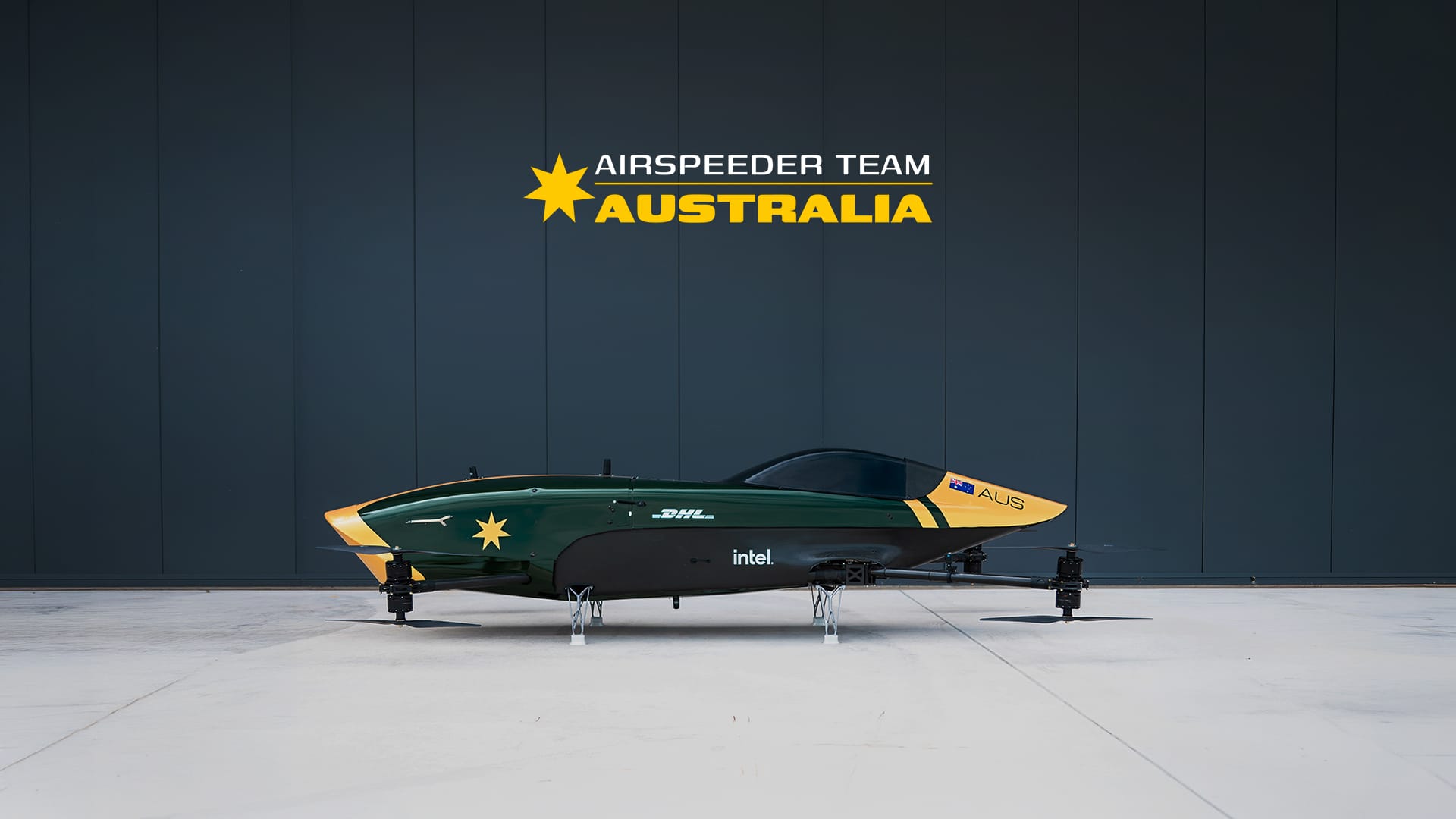
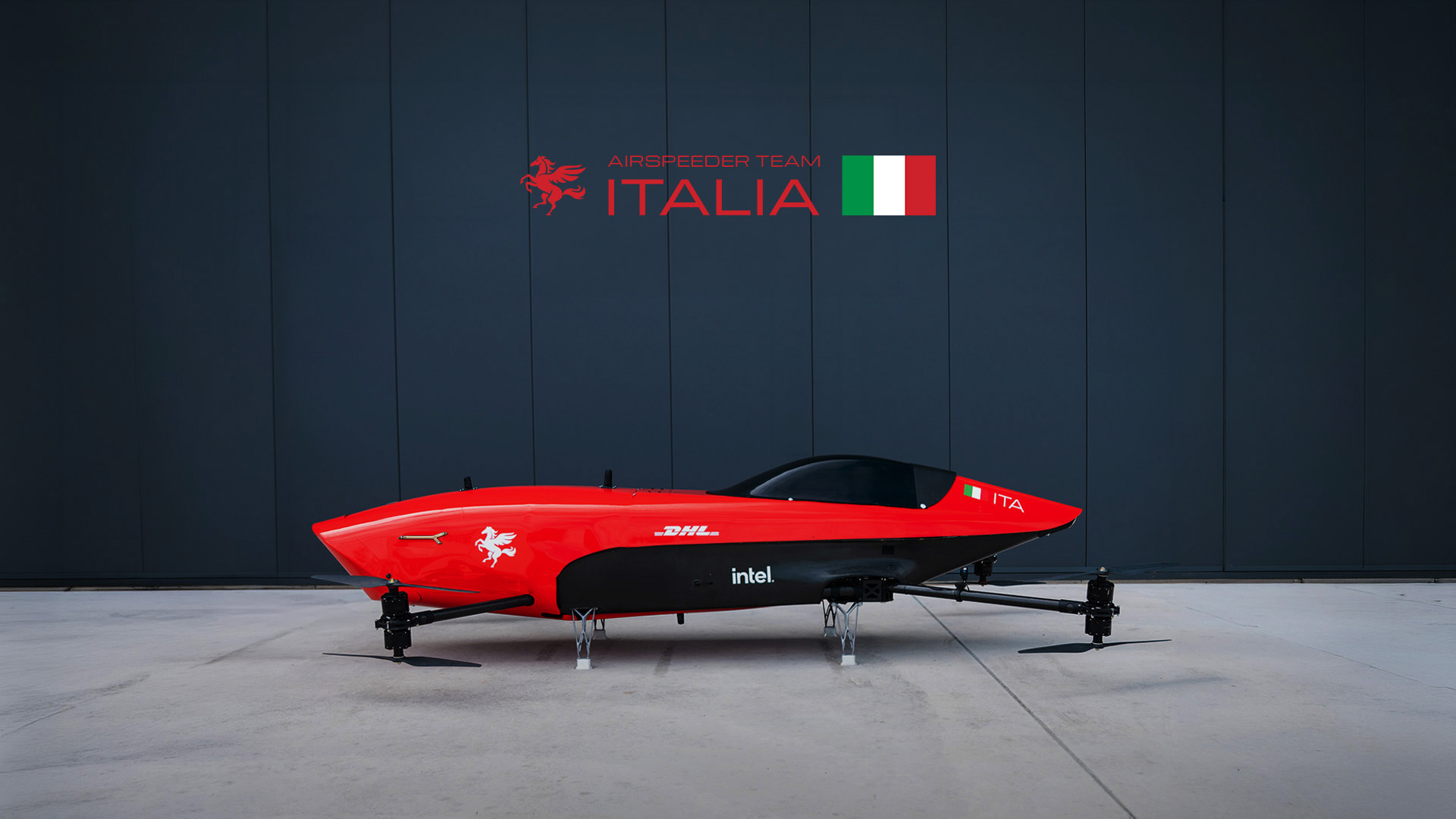
In the Airspeeder International Series, national teams race the Mk3C in their own colours.
Form
Carbon fibre, shaped for speed
Weight is the enemy of performance. The Mk3’s frame and fuselage are carbon fibre, chosen for its strength, stiffness and light weight, which gives the craft its manoeuvrability, performance and efficiency.
Its lines marry the classic forms of 1950s Formula 1 cars with a futuristic aesthetic that speaks of a new mobility revolution.
Performance
96 kW of clean-air power
A 96 kW electric powertrain gives the Mk3 a thrust-to-weight ratio above two, on a craft that weighs just 100 kg. It flies at speeds in excess of 120 km/h.
Compared with the Mk2 proof of concept, power rose by 95% for only a 50% increase in weight.
Agility
Racing car agility, with a third dimension
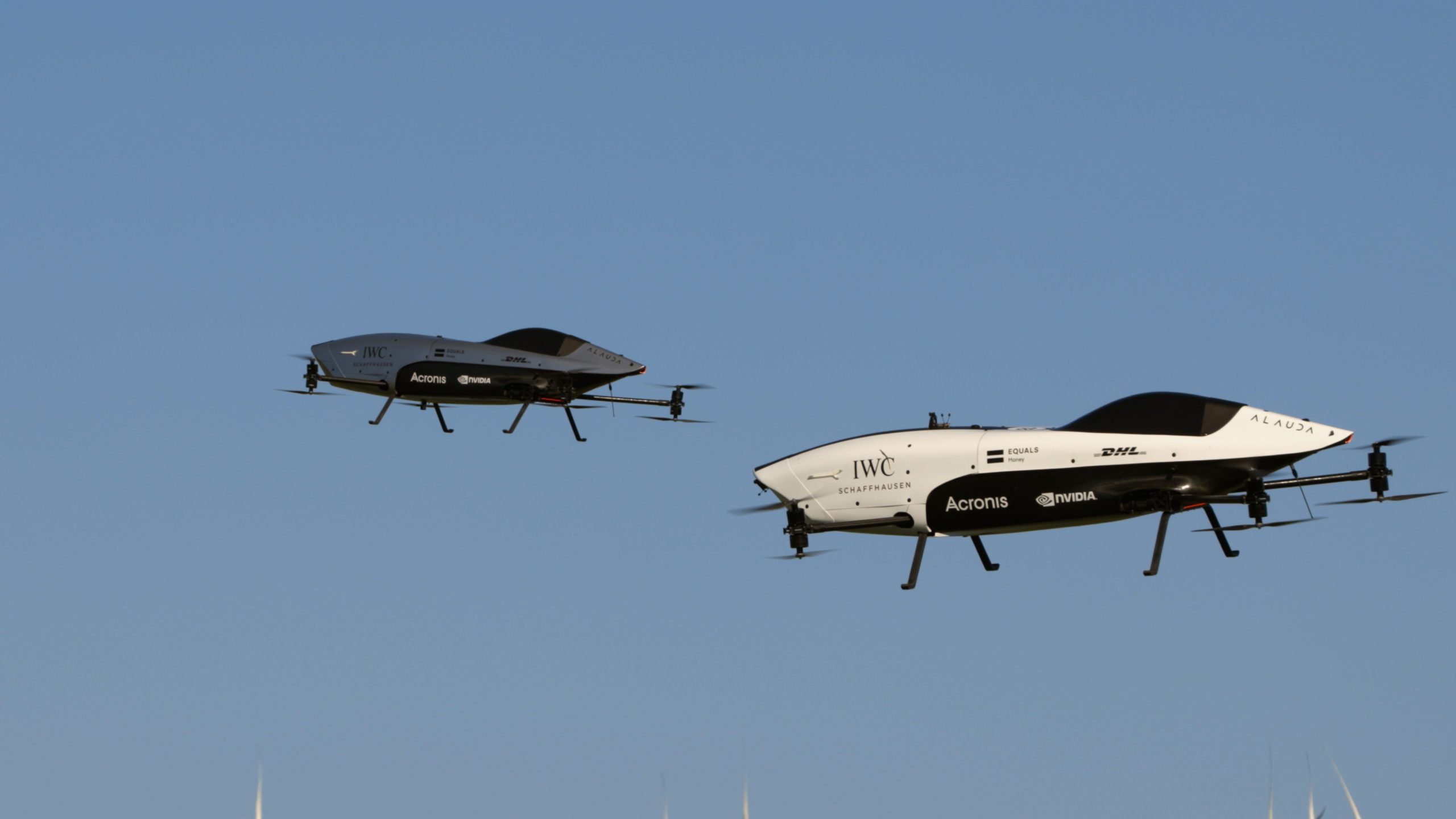
The Mk3 is laid out in an octocopter X formation. Pilots can make the same sharp hairpin turns as a Formula 1 car, with the added dimension of moving vertically.
Safety
The virtual forcefield
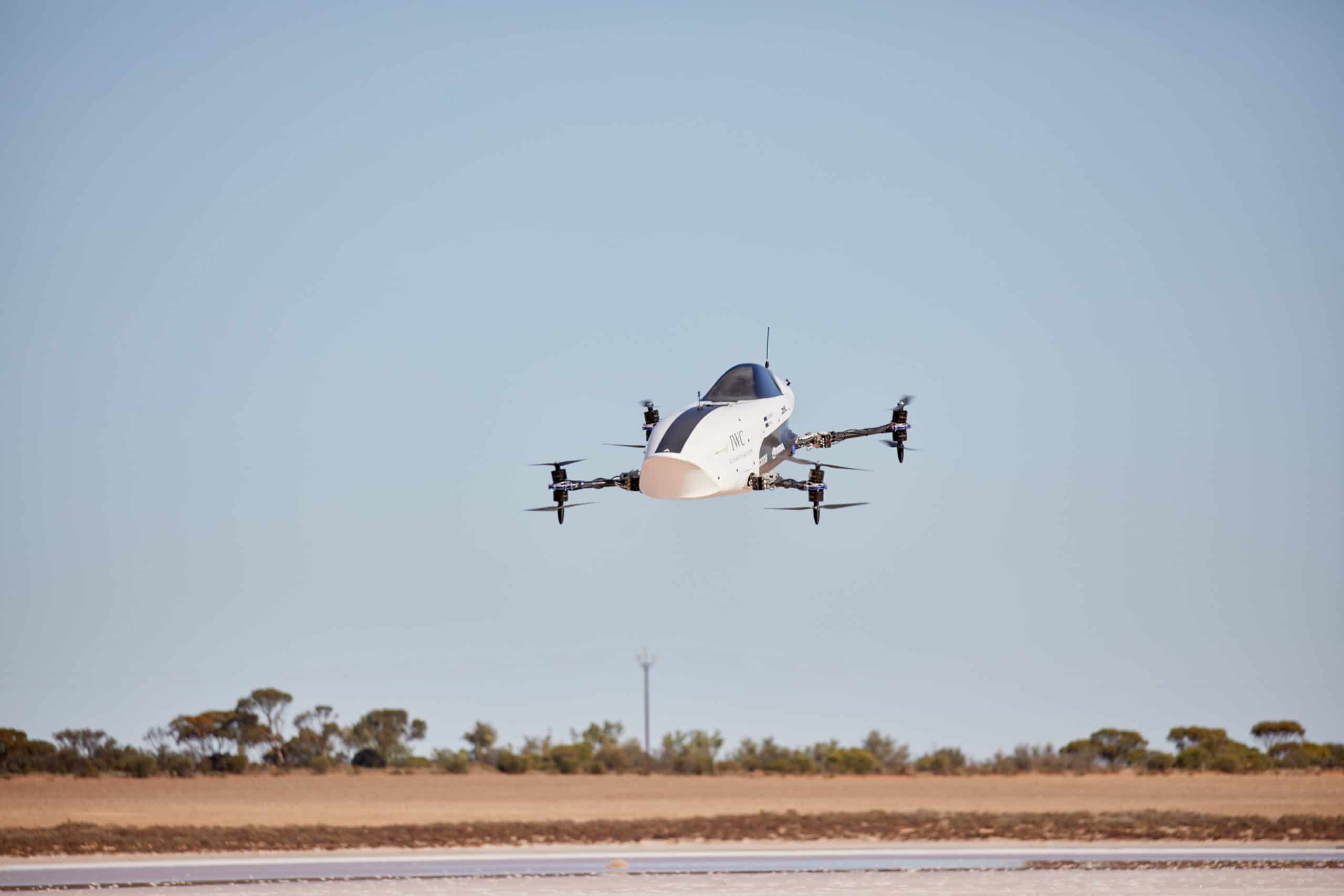
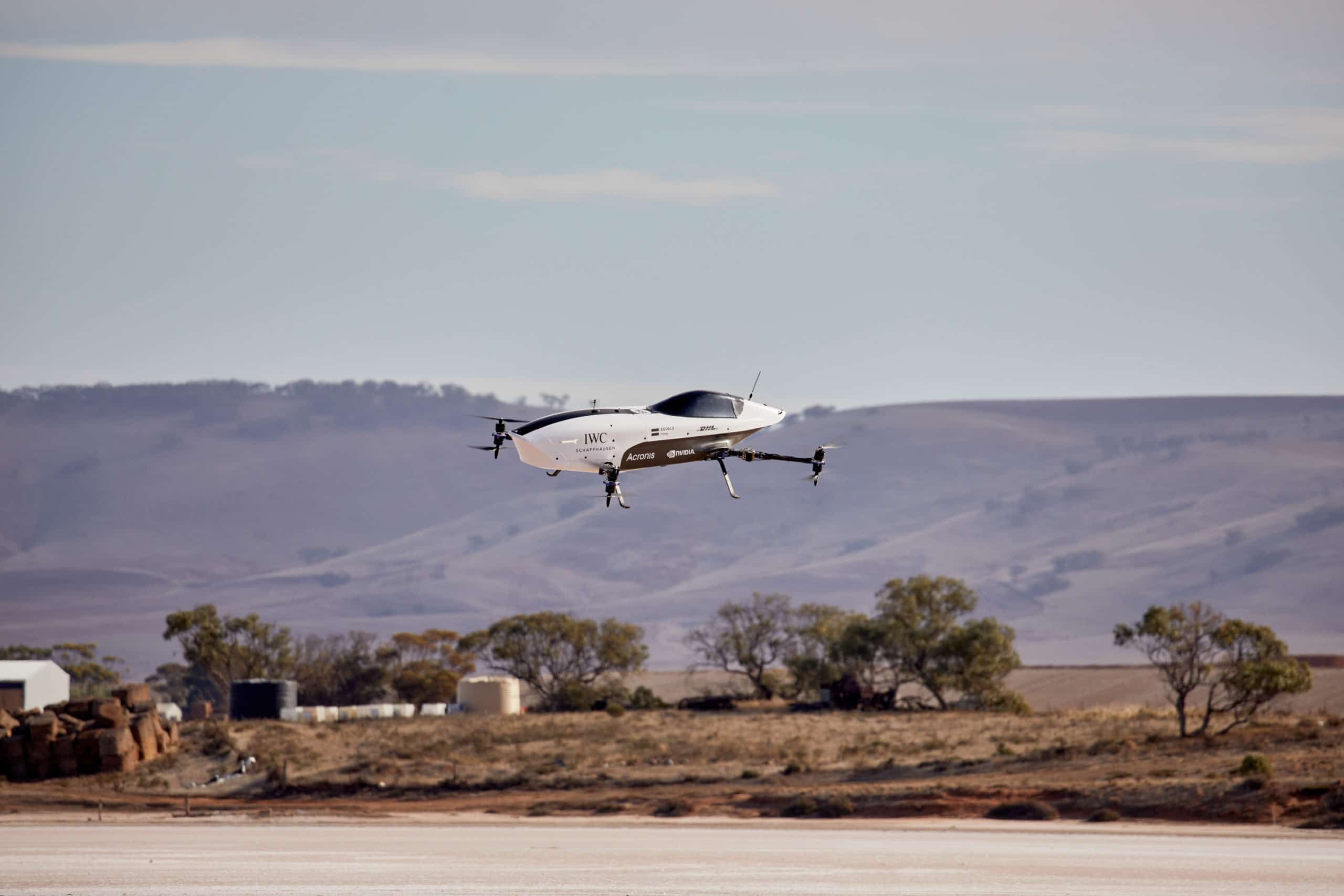
LiDAR and radar collision avoidance systems create a ‘virtual forcefield’ around each craft, so the racing stays close and safe. The octocopter layout keeps the craft stable in the event of a rotor failure.
Advanced Navigation, Official Navigation Partner of the Airspeeder International Series, will equip the Mk3 with high-performance navigation sensors that deliver precise, real-time positioning, velocity and orientation data.
Control
Flown from the ground
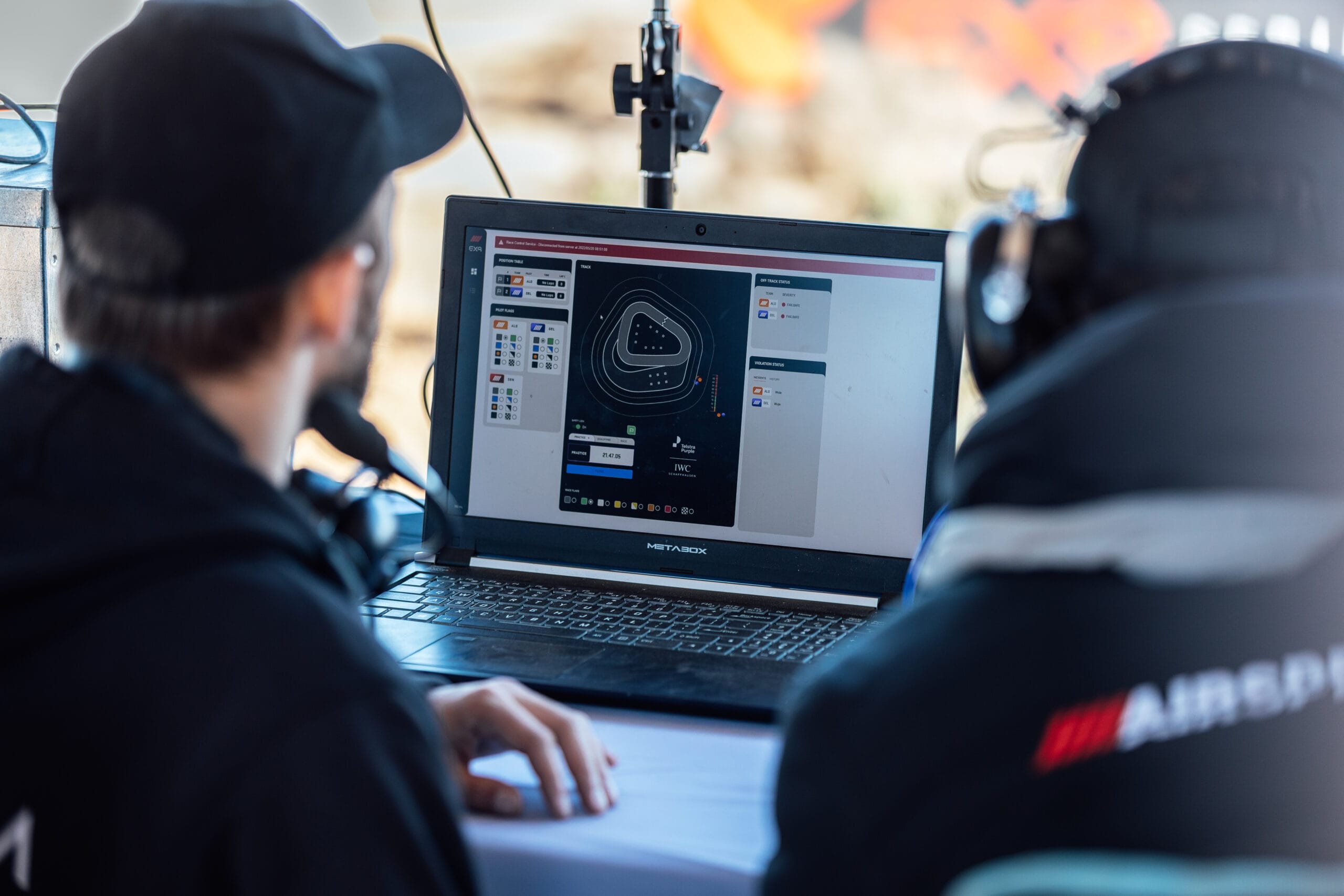
The Mk3 is operated remotely by a pilot on the ground. Pilots use augmented reality to follow digitally mapped racetracks laid over the physical landscape.
Live broadcasts bring fans the pilot’s view of every lap.
Pit stops
Slide and lock
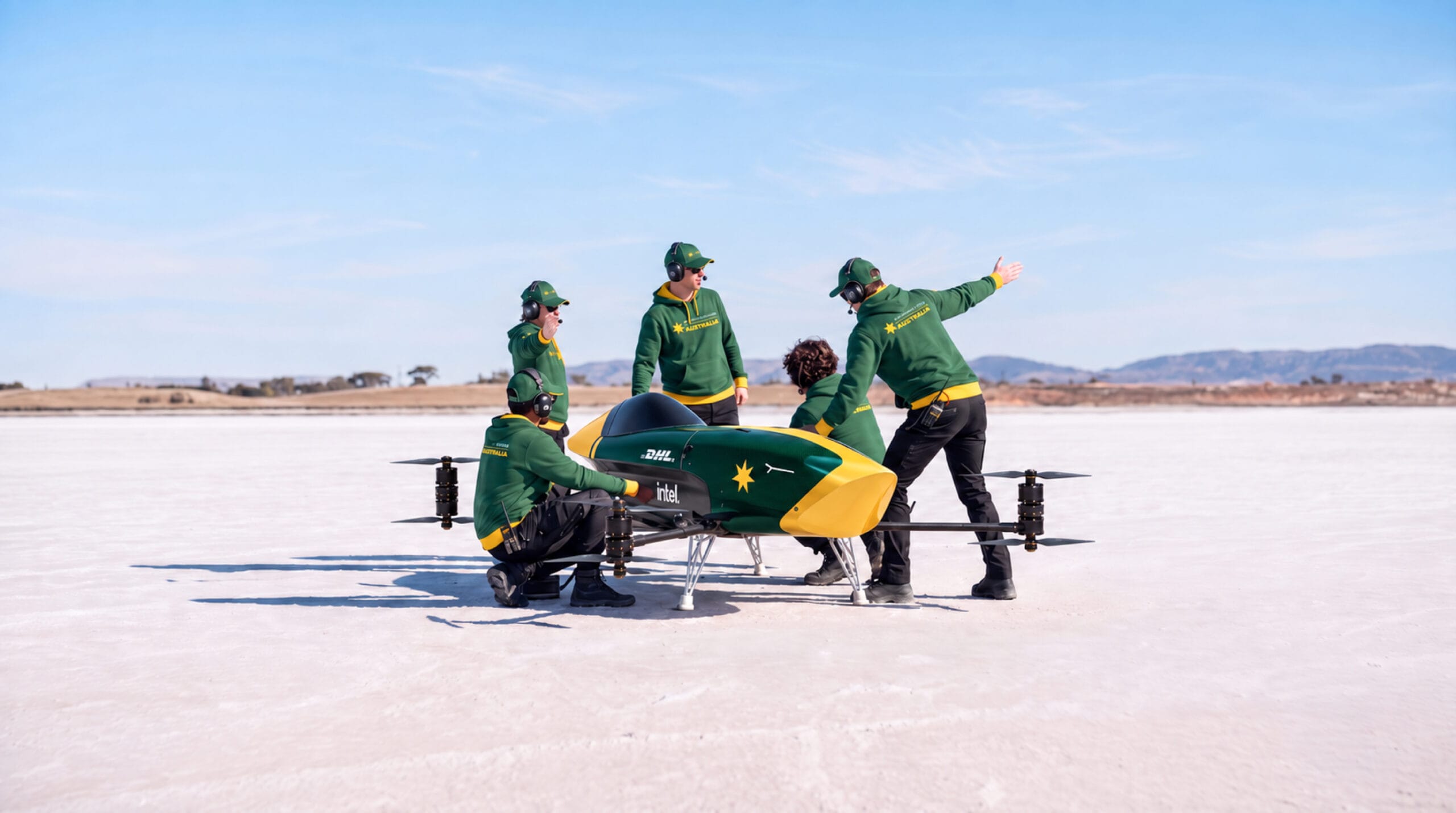
To make rapid pit stops possible, Alauda’s engineers developed a ‘slide and lock’ system for removing and replacing batteries on the ground. It made its debut on the Mk3.
Fast battery swaps turn the pit lane into part of the race.
Film
See the Mk3C fly
Airspeeder Team Italia’s Mk3C in flight